
Over the past several months, I have been hearing a similar concern from bridal retailers and designers: sales are slower, appointments are less predictable, and brides are taking longer to commit.
So I ran a Google Deep Research report examining the luxury bridal market across the United States, United Kingdom, Canada, Australia, Singapore, Hong Kong, Japan, and South Korea. I wanted to understand whether the slowdown was part of a broader market contraction, or whether something more complicated was happening.
This post is the first in a three-part series exploring what the research revealed about the state of luxury bridal, where brides are spending, and how the buying model differs across global markets.
The clearest finding was this: Luxury bridal is not moving in one uniform direction.
In some markets, economic pressure is real. Consumer confidence has weakened. Gown and alteration costs have risen. Some couples are reducing their budgets.
But in other regions, wedding spending remains stable—or is increasing even as the total number of weddings declines.
The more useful conclusion is that bridal is restructuring.
Brides are still spending. But they are comparing more, taking longer to decide, spreading their budgets across more looks, and considering a wider range of ways to access luxury fashion.
Demand has not vanished, but the path to purchase has changed.
1. Bridal is holding up better than luxury fashion overall
The broader luxury market has faced a difficult period.
Aspirational consumers are more cautious. Discretionary purchases are under pressure. Shoppers who once stretched to enter the luxury category are reconsidering what feels worth the expense.
Bridal behaves differently.
A wedding gown is not simply another fashion purchase. It is tied to a milestone, an event, photographs, family expectations, and a very specific moment in a person’s life.
That does not make bridal immune to economic pressure. But it does make the category more resilient.
Couples may spend less elsewhere. They may reduce the guest list, simplify décor, or reconsider certain upgrades. But many continue to protect the parts of the wedding that feel most personal or visible.
The gown is often one of them.
In the United States, nominal wedding budgets remain relatively healthy, and a meaningful segment of brides still spends $4,000 or more on a gown. In Japan, the number of weddings continues to decline, but spending per wedding has reached record levels.
The luxury bride still exists.
She is simply making decisions inside a more complicated market.
2. Healthy demand does not guarantee healthy sales
This is where market reports can become misleading.
A report may show that wedding spending is stable, while a boutique may still experience fewer appointments.
A survey may show that luxury gown budgets remain intact. A designer may still see weaker sell-through.
Both things can be true.
Market demand describes what consumers are willing to spend across a category. It does not tell us whether that spending will reach a particular boutique, designer, or collection.
Between interest and purchase, there are now more opportunities for the sale to break down.
A bride may discover a gown online, then visit several stores before deciding. She may compare the retail price with resale listings. She may reconsider after learning what alterations will cost. She may wait for a trunk show discount. She may choose a less expensive ceremony gown because she is also purchasing two additional looks.
The money may still be in the market. It is simply moving through a less predictable funnel. That distinction matters.
When sales slow, the automatic response is often to cut marketing, reduce inventory, or conclude that the collection is no longer resonating.
Sometimes that diagnosis is correct.
But sometimes the product is not the problem.
The problem is conversion.
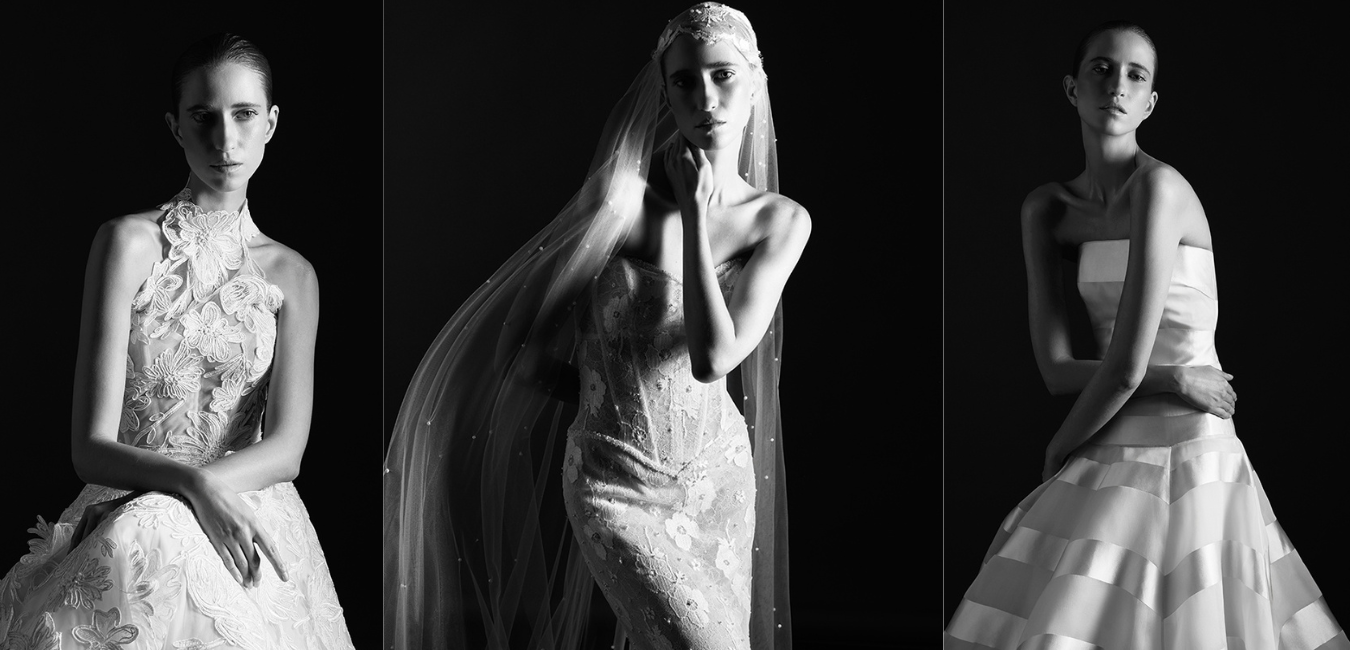
Images: Francesca Miranda
3. Brides are comparing more
Brides now begin shopping with more information than ever.
They arrive with saved gowns, designer lists, screenshots, TikTok opinions, Pinterest boards, pricing clues, and photographs from other brides.
This makes them more informed, but it also gives them more reasons to keep looking.
A bride who once visited two boutiques is now likely visiting twice that. Even after finding a gown she likes, she may continue shopping because she knows there are more options available.
This is often interpreted as a lack of seriousness. But comparison can also be a rational response to a complicated purchase.
Pricing is not always transparent. Alteration costs vary widely. Sample sizing makes fit difficult to judge. Trunk shows introduce temporary access and discounts. Resale platforms reveal what similar gowns may cost elsewhere.
Today’s bride is not only choosing a dress. She is evaluating value, service, fit, timing, and risk.
4. The boutique model is carrying the cost
Independent boutiques absorb much of the cost of this longer decision process.
Every appointment requires staff time, space, inventory, preparation, and follow-up. When brides visit more stores before purchasing, boutiques provide more of the experience without necessarily receiving the sale.
Some stores have introduced appointment fees. Others rely heavily on trunk shows to create traffic and urgency. But trunk shows are changing too.
Historically, their value was access to new collections, limited gowns, or the chance to meet a designer.
Increasingly, the main incentive is a discount.
That may help generate appointments in the short term, but it can also teach brides to wait for a promotion rather than commit at full price.
Appointment fees and discount-led events may protect immediate revenue but they do not solve the deeper problem.
The bride still needs a clearer reason to decide.
5. Rental and resale are changing how brides understand value
Rental and resale remain relatively small compared with traditional gown purchases in many Western markets, but they are becoming more visible.
That visibility matters even when the bride ultimately purchases new.
Once brides can see luxury gowns available through resale or rental, ownership is no longer the only reference point.
A bride may still want the boutique experience, a new gown, custom alterations, and the assurance that comes with purchasing through an authorized retailer. But she is now comparing that purchase with other ways of accessing the same level of design.
In several Asian markets, this is already the established model.
In Japan, South Korea, and Singapore, luxury gowns are often accessed through rental salons, venue partnerships, or bundled wedding packages. Purchase is not always the default.
Western bridal businesses should pay attention.
The lesson is not that every boutique must become a rental company, but rather that the meaning of value is expanding beyond ownership.
Service, exclusivity, fit, access, styling, alterations, and convenience all become more important when the physical gown is no longer the only thing being compared.
6. The bridal budget is becoming fragmented
Another reason gown sales may feel less predictable is that the gown is no longer the bride’s only major fashion purchase.
Many weddings now include several events:
A civil ceremony
A welcome party
A rehearsal dinner
The ceremony
The reception
An after-party
A farewell brunch
Each event may have its own look.
This creates opportunity for bridal fashion, but it also changes how the budget is allocated.
A bride may be willing to spend significantly across her wedding wardrobe while placing a firmer ceiling on the ceremony gown.
From the perspective of one boutique, she may appear more price-conscious.
From the perspective of her total fashion spending, she may be spending more.
This is why the industry needs to be careful when interpreting changes in gown budgets.
Lower spend on one item does not always mean lower interest in bridal fashion.
It may mean that bridal fashion now includes more items.
We will explore this shift more closely in Part Two of this series.
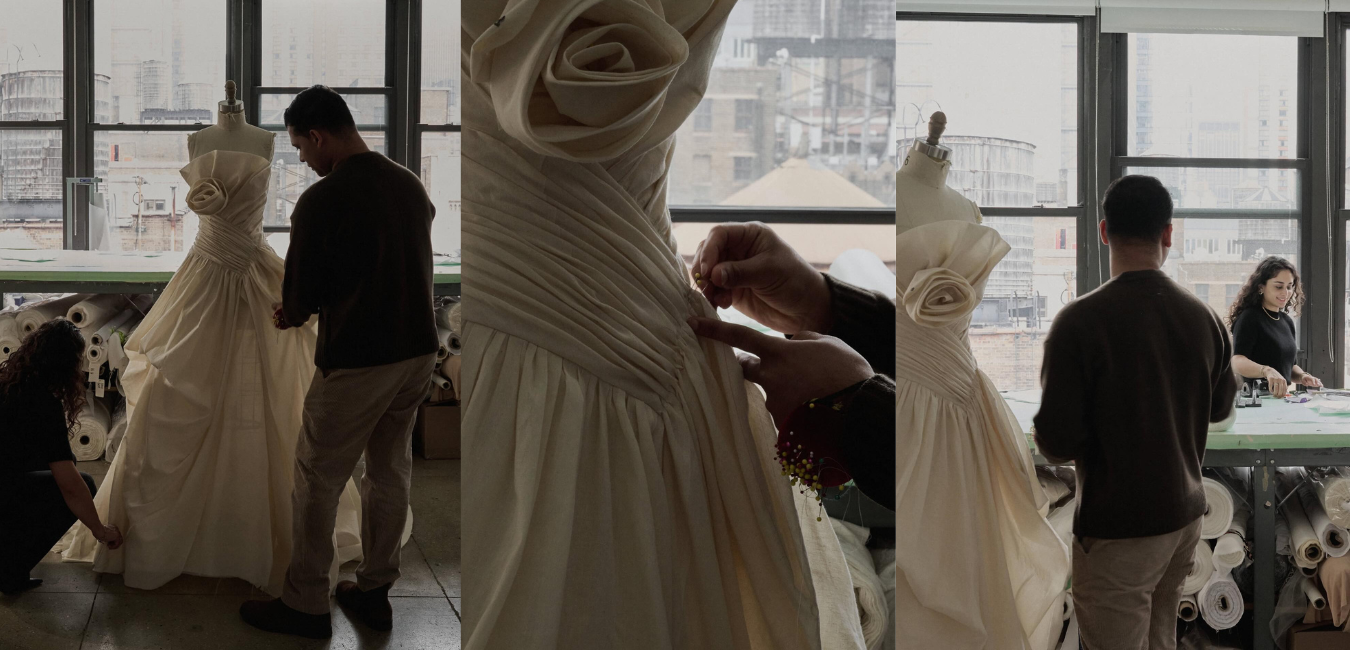
Images: ENAURA
7. Not every market challenge is the same
The global findings also make one thing very clear: There is no universal luxury bridal market.
The United Kingdom is experiencing more visible budget compression, with couples actively adjusting spending downward.
Hong Kong has softened modestly from a record spending peak.
Australia remains relatively stable, but cleaner and more minimalist aesthetics may create challenges for brands built around heavy lace and embellishment.
Japan and South Korea have fewer marriages but strong spending inside highly controlled venue and rental-salon systems.
Singapore remains affluent, but luxury purchasing exists within a market where bridal packages and rental are deeply established.
A designer can perform well in one region and struggle in another without either result proving that the brand is universally strong or weak.
Sometimes the issue is economic.
Sometimes it is aesthetic.
Sometimes it is distribution.
Sometimes brides want the product but cannot access it through the way their local bridal market operates.
That is why “the market is down” is rarely a sufficient explanation.
8. The right response begins with the right diagnosis
When a bridal business experiences slower sales, it needs to identify where the problem actually sits.
Is demand weakening?
Is the collection out of step with the market?
Is pricing creating resistance?
Are alteration costs becoming a barrier?
Are brides discovering the brand but failing to find a nearby retailer?
Are stores carrying the wrong assortment?
Are trunk shows generating appointments without full-price conversion?
Is the marketing reaching brides early enough to influence their shortlist?
Or is the brand still relying on a buying journey that no longer reflects how brides make decisions?
These are different problems.
They require different responses.
Cutting marketing will not fix weak distribution.
Increasing awareness will not fix poor merchandising.
Adding more trunk shows will not fix a collection-market mismatch.
And blaming brides for comparison shopping will not make the decision process less complicated.
Luxury bridal is not disappearing
The luxury bridal industry is still supported by something powerful: people continue to place emotional and financial value on weddings.
But resilience should not be confused with stability.
The market can remain valuable while the businesses inside it face serious pressure.
Brides are still interested in luxury. They are still willing to invest in design, craftsmanship, and the experience of finding the right gown.
What has changed is how they evaluate that investment—and how many alternatives now sit between desire and purchase.
The industry does not need to panic, but it does need to pay attention.
Because the next phase of luxury bridal will not be won by the brands that assume demand will continue to move through the same stores, events, and sales process.
It will be won by the businesses that understand where the bride’s attention, budget, and decision-making have moved.
Next in the series:
Brides Are Still Spending—Just Not All on One Gown
In Part Two, we will examine how multi-event weddings, second looks, rental, resale, and rising service costs are changing the way brides allocate their fashion budgets.