
What Should We Be Teaching Our Children Now? Reengineering Education for an Uncertain World

This is Part 1 of a two-part series where I explore big questions about AI and its implications for the future of humanity. In this post, I cover an urgent question about AI and education. Specifically, what should we be teaching the children who will inherit this world?
To be clear, my concern extends beyond AI itself. It's the convergence of AI, social media, disinformation, and a visible erosion of the habits that make people capable of thinking clearly that creates this sense of urgency for me. Less reading. Less sustained attention. Less practice with ambiguity and complexity.
And it’s not exactly that people are becoming dumber, but that they're becoming less practiced at the specific skills that protect against manipulation and shallow thinking, because nothing in their environment demands those skills.
And our education systems, by and large, are still training children for a world that no longer exists.
The Obsolescence Problem
Most schools are still optimized for an industrial economy: memorize information, follow procedures, produce standardized outputs. That's precisely what AI does better and cheaper than any human ever will. We are training children to compete with machines on the machines' terms. It's a race they will lose.
The question that should reorganize everything is: What can humans do that AI cannot, and what do humans need in order to thrive alongside it?
The answer, Claude and I agree, comes down to one word: judgment. The ability to evaluate, decide, and take responsibility for those decisions. Content knowledge matters, but it's no longer the bottleneck. Judgment is.
I put the question to Claude directly: what should children be taught now? I already had strong instincts— shaped by my own education in English, communications, and philosophy– and by years of watching how technology reshapes the way people think and communicate. But I wanted to see how Claude would reason through it. What came back was, in many ways, an articulation of what I already believed but hadn't fully organized. The reasoning was Claude's. The convictions were already mine. That collaboration with Claude– human intuition meeting machine articulation– is itself an example of what this new curriculum should prepare students for.
Here's what emerged.

Epistemic Self-Defense
This is the most urgent priority, and it should be taught as rigorously as mathematics.
Children need to learn how to evaluate whether something is true. Not as a one-off media literacy unit, but as a foundational, years-long practice. That means understanding how evidence works, what makes a source credible, how manipulation operates emotionally, not just logically, and how their own cognitive biases make them vulnerable.
The disinformation crisis is not primarily a technology problem. It's a thinking problem. And it's solvable if we treat it as a core competency rather than an elective.
Deep Reading and Sustained Attention
I'm an English major. I'll admit my bias. But the case for literature and long-form reading goes well beyond cultural enrichment.
The capacity to sit with a complex text, to hold ambiguity, follow a long argument, tolerate not-knowing, engage with a mind unlike your own, is both a cognitive skill and a form of moral training. It builds the exact mental muscles that social media erodes: patience, nuance, the ability to hold two contradictory ideas simultaneously without reaching for your phone.
Deep reading should be non-negotiable through secondary school in order to build a kind of cognitive infrastructure.

History
History might be just as important as a core subject, but interestingly, Claude left it off the list. When I asked what children should be taught, I got a thorough answer covering critical thinking, literature, ethics, numeracy, and AI literacy. But no history. I had to add it myself. Which is, in a way, a perfect illustration of why human judgment still matters in these conversations.
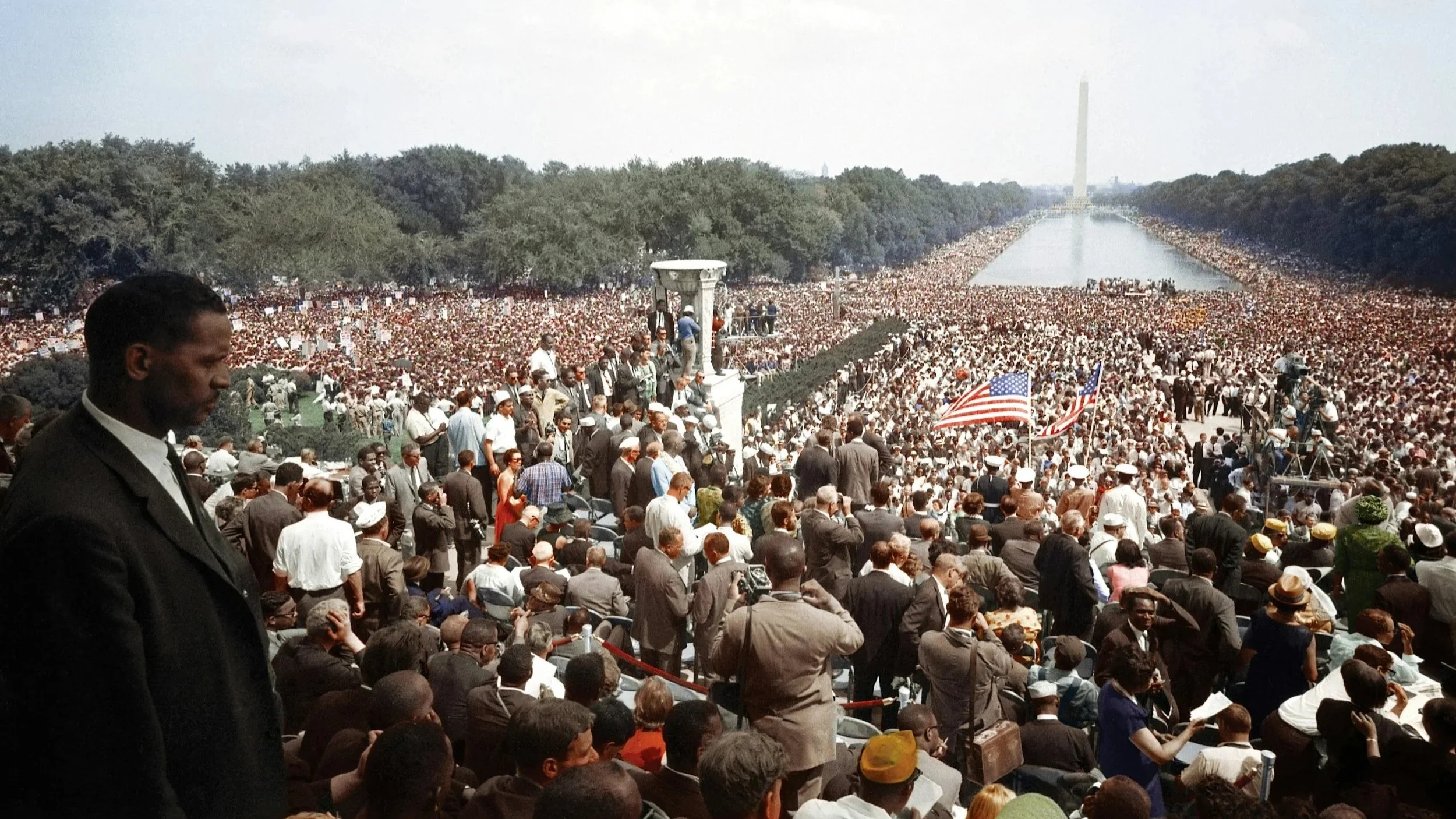
History is the only discipline that teaches you the present is contingent; that the world was not always like this and will not stay like this. Without that understanding, people are trapped in the eternal present that social media creates, where everything feels unprecedented and nothing has context.
More practically, history shows you how societies actually go wrong. How propaganda works on real populations. How economic disruption creates political instability. How democracies erode. How ordinary people become complicit in things they'd never have imagined. That knowledge isn’t just for academics. It's survival equipment for us all.
People who know history recognize patterns. They hear a demagogue and think, I know this move. They understand that institutions were constructed and can be deconstructed. This is knowledge required to protect the things you value.
Writing as Thinking
Not writing as performance or assessment. Writing as the process by which you figure out what you actually think.
Virginia Woolf understood this: the sentence as a unit of thought, not just communication. If students outsource all their writing to AI, they lose the primary tool humans have for clarifying their own minds. Schools should teach writing as cognitive practice, and make that distinction explicit.
This doesn't mean rejecting AI. It means understanding when to use it and when the point is the struggle itself.

Working With AI, Not Being Replaced by It
This is where my professional experience has taught me something many educators haven't yet grasped.
In my work, I use Claude and other LLMs for campaign strategy, copy, data analysis, and brand positioning, among other things. But the value I provide is never in the output Claude generates. It's in the direction, correction, judgment, and contextual knowledge I bring to the process. I know when Claude's tone is wrong for a luxury bridal brand. I know when a data point needs reframing. I know what questions to ask.
That skill–the ability to direct AI, evaluate its output, and apply human judgment–is what children need to learn. They should practice the cycle of prompting, evaluating, and refining. And they should understand, deeply, why the human layer matters.
The students who will thrive are not those who reject AI or those who defer to it uncritically. They're the ones who learn to hold the reins.
Numeracy and Probabilistic Thinking
The ability to understand risk, proportion, base rates, and what data actually shows versus what someone claims it shows.
Most adults cannot critically evaluate a health study, a financial projection, or an election poll. This is teachable, and it is foundational to everything from personal finance to civic participation.
In a world saturated with data, both real and fabricated, the ability to think quantitatively about claims is a form of self-defense.

Ethics as Practice
Not exactly framed as philosophy lectures (most students have an aversion to this) but as structured practice in moral reasoning. Case studies, dilemmas, debates where students must inhabit positions they disagree with. The goal is not to produce a particular set of values, but rather to produce people who are practiced at thinking carefully about hard questions rather than reacting tribally.
Given that we are building machines whose moral status is genuinely uncertain, the ability to reason ethically about novel situations is no longer optional.
And Then There's Mental Health
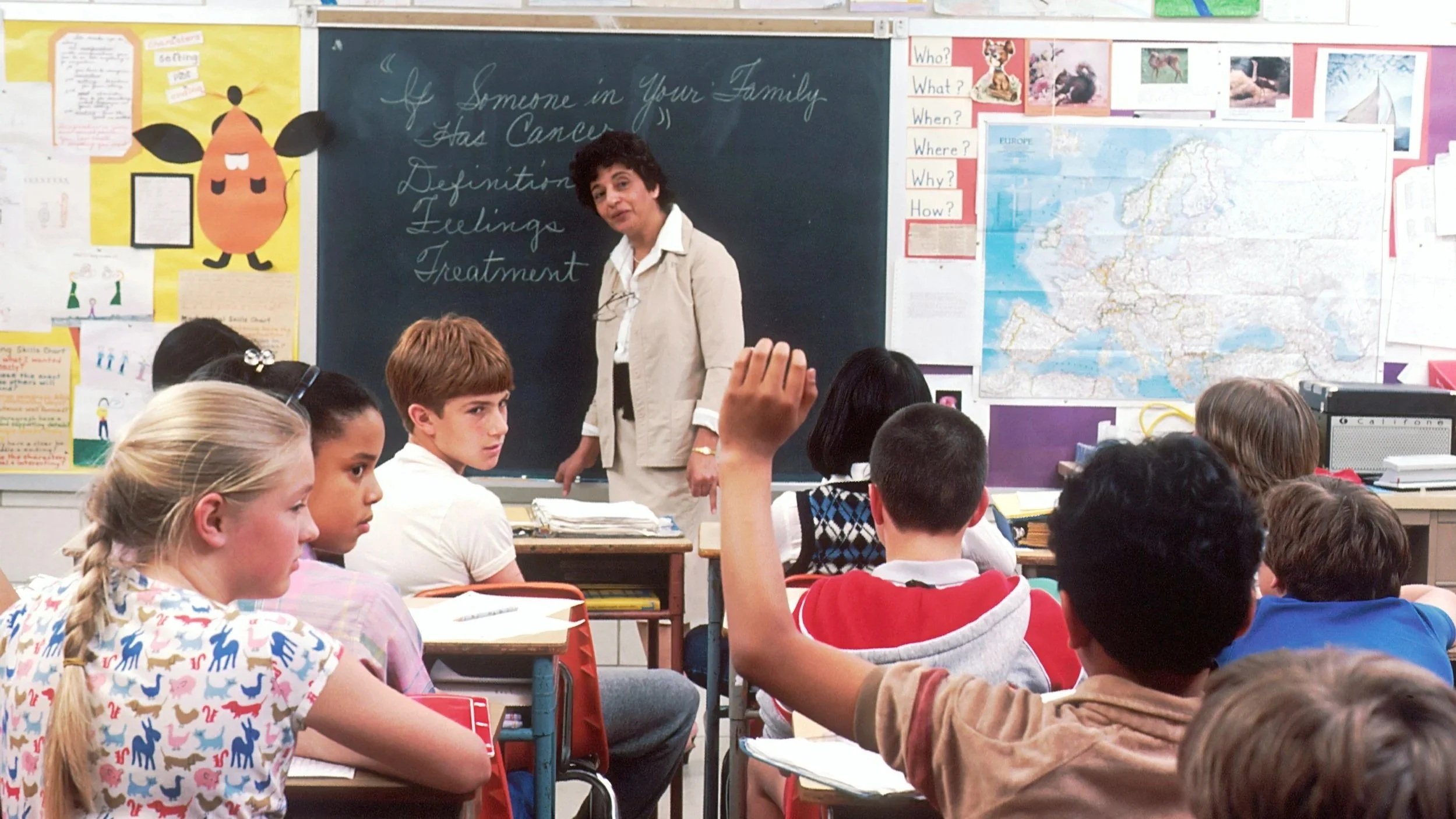
After we'd built out the intellectual curriculum, I asked Claude a question that had been nagging at me: does good mental health automatically follow from all of this? The answer was no–and the reasoning was important. A strong intellectual curriculum builds cognitive resilience, but that's not the same as emotional resilience. You can be a brilliant critical thinker and still be falling apart inside.
There are specific things that need to be taught directly.
Emotional literacy. Most people (adults included) can't accurately name what they're feeling beyond "good," "bad," or "stressed." The ability to distinguish between loneliness and boredom, between anger and grief, between anxiety and excitement, has real consequences. When you can't name what you're feeling, you can't address it. You react. This should start early and be treated as seriously as reading.
Body-mind connection. Not as wellness platitudes but as practical knowledge. How sleep deprivation mimics depression. How chronic stress reshapes the brain. How movement affects mood through specific neurochemical pathways. Children should understand their own nervous systems the way they understand basic biology. Without that framework, they have no basis for self-regulation. They just think something is wrong with them.
Solitude as a skill. This one is underappreciated and directly connected to the social media problem. Many young people have never learned to be alone with their own thoughts without reaching for a screen. The ability to sit with yourself, to tolerate your own inner landscape without numbing or distracting, is foundational to mental health. It's also foundational to creativity, self-knowledge, and the kind of deep reading and writing I described above. These things are connected.
Relationship skills. How to set a boundary. How to repair a rupture. How to disagree without escalating. How to ask for help without shame. How to recognize when a relationship is harmful. None of this is intuitive. Most adults are bad at it because nobody taught them.
An honest understanding of what social media does. Not scare tactics. Those backfire with young people. Mechanistic knowledge. How variable reinforcement schedules create compulsive checking. How social comparison distorts self-perception. How algorithms curate a version of reality designed to maximize engagement, not truth. When you understand how you're being manipulated, you develop a different relationship to the manipulation. Not immunity, but agency.
Normalization of struggle. Children need to know that difficulty, confusion, failure, and emotional pain are normal, and not signs that something is broken. But that's different from glorifying suffering or telling them to push through. The message should be: hard things are hard, that's expected, and there are specific skills and supports that help.
The Thread
The thread running through all of this– the critical thinking, the history, the literature, the ethics, the mental health skills, the AI literacy– is judgment. The distinctly human capacity to evaluate, weigh, decide, and take responsibility.
That's what AI cannot do. And it's what education should be organized around.
We are not going to stop the technological transformation that's underway. We are not going to uninvent AI or dismantle social media or reverse the information overload. But we can raise a generation that is equipped to navigate it critically, ethically, and with their mental health intact.
That requires reimagining what school is for. Not adding a coding class or a mindfulness minute to an unchanged industrial-era curriculum. Fundamentally rethinking what we owe the next generation, given what we know about the world they're entering.
It starts with taking the question seriously. Which is, if you've read this far, exactly what you're doing.
This essay is Part 1 of a two-part series. Part 2 explores whether AI is becoming self-aware — and why the answer matters more than you might think.
Carla Vargas is the founder of The Ivory Grey Project, a digital marketing agency specializing in luxury bridal brands. She writes about marketing, technology, strategy, and the questions that keep her up at night.